
Published – September 2, 2025
Updated – January 16, 2026
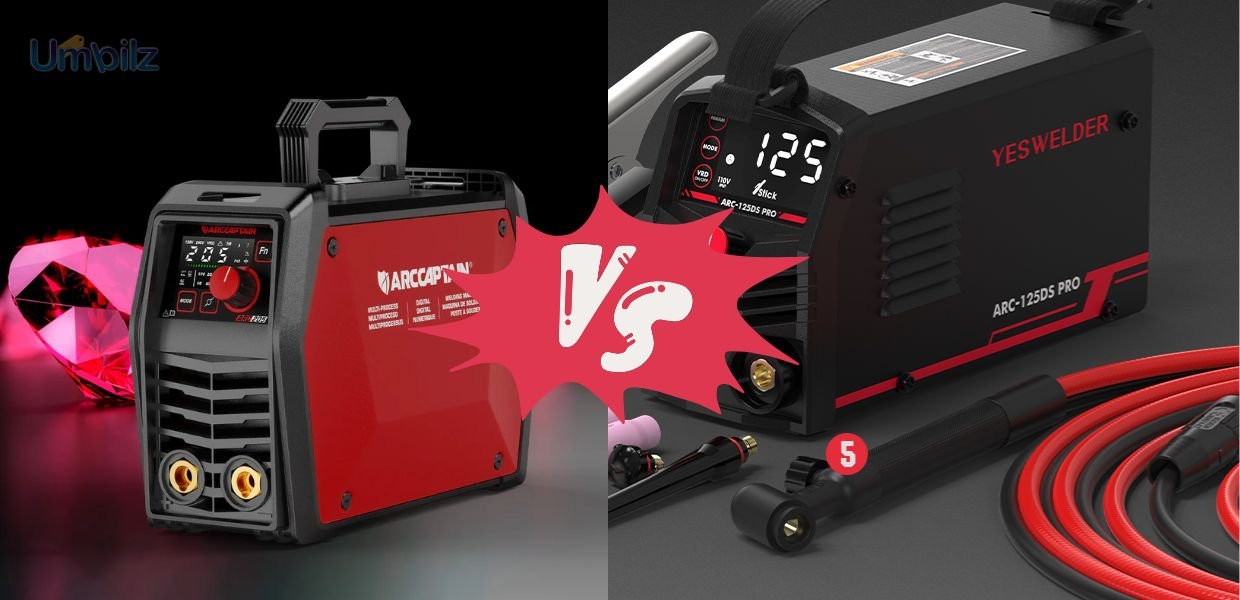
When comparing ArcCaptain vs YesWelder, the discussion usually centers on one core question. Which brand gives you more real-world value for your money. Both names are popular among hobby welders and skilled DIY users who want capable machines without paying professional shop prices. On paper, their specs often look similar. In practice, the differences show up in arc stability, ease of learning, long-term reliability, and how well the machine grows with your skills.
This guide breaks down ArcCaptain and YesWelder from a practical welding perspective, focusing on performance, build quality, usability, and support. The goal is not hype, but clarity. By the end, you should know which brand fits your budget, experience level, and the kind of projects you actually weld.
Brand Background and Market Positioning
YesWelder
YesWelder has built a stronger reputation over time among hobbyists and intermediate welders. The brand focuses heavily on user-friendly controls, stable arcs, and features that make learning easier without sacrificing performance. While still affordable, YesWelder machines tend to feel more refined, which is why they are frequently recommended in welding forums and buyer guides.
ArcCaptain
ArcCaptain positions itself as a budget-friendly option for home users. Its lineup is largely built around compact inverter welders that support MIG, Stick, and in some cases, TIG welding. The brand appeals to beginners who want versatility at a low entry price. Community feedback often points to respectable power output for the cost, though opinions vary on consistency and long-term durability.
Why These Comparison Factors Matter
Choosing a welder is not just about amperage numbers. Real value comes from how those specs translate into actual weld quality, how forgiving the machine is when your technique is not perfect, and whether it holds up after months or years of use. This comparison looks at performance, construction, usability, portability, price logic, and support because these are the areas that most directly affect daily welding experience.
Performance and Capability
Performance is where differences start to become noticeable once you strike an arc.
ArcCaptain welders typically offer a solid amperage range suitable for light fabrication, automotive work, and basic steel projects. Most models handle thin sheet metal well and can push into thicker material with proper prep. However, arc smoothness can feel less consistent, especially at lower settings where beginners spend most of their time.
YesWelder machines generally deliver more stable arcs across a wider range. This matters when welding thinner materials or switching processes. Many users find that YesWelder’s MIG and Stick performance feels more predictable, reducing spatter and making bead control easier. For TIG-capable models, arc control tends to be smoother, which is important for cleaner welds.
From a practical standpoint, both brands cover common home-shop needs, but YesWelder often feels more forgiving when technique is not perfect.
Build Quality and Durability
Build quality influences not only lifespan but also how confidently you can run a machine near its limits.
ArcCaptain welders use lightweight housings and compact internal layouts. This keeps costs and weight down, but heat management can be less robust on extended sessions. For occasional use, this is usually fine. For longer weld cycles, thermal protection may engage more often.
YesWelder machines generally feel more solid, with better airflow design and internal component layout. Fans and heat dissipation are tuned to support longer duty cycles at practical amperage levels. Over time, this contributes to fewer interruptions and less stress on internal electronics.
Neither brand is built for industrial abuse, but YesWelder tends to inspire more confidence for repeated use.
Ease of Use and Learning Curve
Ease of use is especially important for beginners.
ArcCaptain models often rely on more manual adjustment. This can be useful for learning how settings interact, but it also means more trial and error. Beginners may struggle initially to dial in consistent results.
YesWelder places a stronger emphasis on intuitive controls. Clear displays, smoother adjustment knobs, and better default behavior make it easier to get acceptable welds quickly. This does not limit experienced users, but it significantly shortens the learning curve for newcomers.
For anyone still developing technique, usability is a major reason why YesWelder is often preferred.
Portability and Power Options
Both brands understand that many users weld in garages, driveways, or temporary workspaces.
ArcCaptain welders are usually compact and lightweight, making them easy to move and store. Most support standard household power, which is convenient for basic setups.
YesWelder machines are similarly portable, with many models offering dual-voltage capability. This flexibility allows users to run on standard outlets or higher voltage when available, unlocking better performance without changing equipment.
If portability is critical, both perform well. If power flexibility matters, YesWelder has an edge.
Price and Value Logic
At first glance, ArcCaptain often appears cheaper. That lower price can be appealing for beginners who want to minimize upfront cost. However, value is not just about purchase price.
YesWelder machines typically cost slightly more, but that difference often buys better arc stability, easier setup, and more consistent results. Over time, this translates into less frustration, fewer wasted materials, and a smoother learning process.
For many users, that balance of cost and performance makes YesWelder the stronger value choice, especially when factoring in long-term satisfaction. Buyers looking for deals often look for a Yeswelder discount code to narrow the price gap even further.
Warranty and Customer Support
Warranty clarity and support responsiveness matter more than most buyers expect.
ArcCaptain warranties are generally adequate, but documentation and support experiences can vary. Responses may depend on region and retailer.
YesWelder is known for clearer warranty terms and more accessible customer support. Replacement parts, troubleshooting help, and communication tend to be more straightforward. For users investing in their first serious welder, this reliability adds peace of mind.
Head-to-Head Feature Comparison
In basic terms, both brands offer multi-process capability, inverter efficiency, and portability. Where YesWelder pulls ahead is in refinement. Arc stability, control layout, and power flexibility all contribute to a more polished experience.
For those new to welding, understanding welding basics and how machine behavior affects technique is crucial. Machines that respond predictably make learning far less frustrating, which is where YesWelder’s design philosophy shows its strength.
Who Should Choose Which
Budget Beginners
If cost is the primary concern and usage will be occasional, ArcCaptain can be a workable entry point. It provides enough power to learn fundamentals without a large investment.
Intermediate or Occasional Home Projects
For users who weld regularly on home projects, YesWelder offers a better balance of ease and performance. The smoother arc and clearer controls make a noticeable difference over time.
Skilled DIYers and Semi-Pro Users
YesWelder is the more sensible choice here. Dual-voltage support, consistent performance, and better thermal handling suit users who push their machines harder.
Worksite or Heavy Use Scenarios
Neither brand is designed for full professional shop abuse, but YesWelder holds up better under frequent use. Pairing a reliable machine with proper safety gear is essential, and many users also reference a detailed helmet review when upgrading their setup.
For those ready to buy, checking the official store for a yeswelder discount code can improve overall value without sacrificing quality.
Common Myths and Misconceptions
One common myth is that higher price always equals better performance. In reality, design and component quality matter more than cost alone.
Another misconception is that heavier machines are more powerful. Modern inverter technology allows compact welders to deliver impressive output when designed correctly.
Brand hype can also distort expectations. Looking at real specs and understanding safety and performance standards helps separate marketing from actual capability.
Final Recommendation
When weighing ArcCaptain vs YesWelder, both brands serve a purpose. ArcCaptain works for entry-level users who want basic capability at the lowest price. YesWelder, however, consistently delivers better overall value through smoother performance, easier learning, stronger support, and more refined design.
For most hobbyists and intermediate welders, YesWelder is the smarter long-term choice. The slight price premium is justified by a better welding experience and fewer compromises as your skills grow.
Frequently Asked Questions
Q. Is YesWelder better than ArcCaptain for beginners?
YesWelder is generally easier for beginners due to more stable arcs, clearer controls, and a smoother learning curve.
Q. Can ArcCaptain weld thick steel reliably?
ArcCaptain can handle thicker steel for light projects, but extended welding at higher amperage may be limited by duty cycle.
Q. Which brand offers better long-term reliability?
YesWelder tends to be more reliable over time thanks to better heat management and more consistent internal components.
Q. Are YesWelder machines suitable for professional use?
They are best suited for skilled DIYers and semi-pro users rather than full-time industrial shop work.
Q. Does ArcCaptain support multiple welding processes?
Yes, many ArcCaptain models support MIG, Stick, and basic TIG functions, depending on the unit.
Q. Is the price difference between ArcCaptain and YesWelder worth it?
For most users, YesWelder’s improved usability and performance justify the slightly higher price.